
To Policy Response
From article → federal evaluation
To National Media
Coverage across major outlets
To Policy Conversation
Industry-wide narrative shift
Instead of following the existing conversation, Bob made a deliberate choice:
Don’t react to the market. Reframe it.
The core thesis was straightforward and almost no one was saying it:
The solution wasn’t lowering rates. The solution was unlocking the low rates that already existed.
This led to a bold, non-consensus position — introduce the concept of portable mortgages as a viable U.S. policy solution, reframe the problem from rate levels to rate immobility, and challenge the industry’s passive, wait-and-see stance. This wasn’t a safe take.
At the time, portable mortgages were rarely discussed in the U.S. context, structurally complex within the existing mortgage-backed securities framework, and viewed by most industry observers as unrealistic at scale. The mechanisms that made portability work in Canada and the UK — short 2–5 year fixed terms, different securitization structures — didn’t map cleanly onto the American 30-year fixed-rate system.
That was the point. The friction around the idea wasn’t a reason to avoid it. It was proof the conversation needed to happen.
The thesis was published in HousingWire on October 24, 2025:
The article made three moves that most industry commentary doesn't:
It reframed the asset. Low-rate mortgages weren't a relic of the pandemic — they were trapped economic value, sitting in existing loan portfolios, being destroyed at every closing.
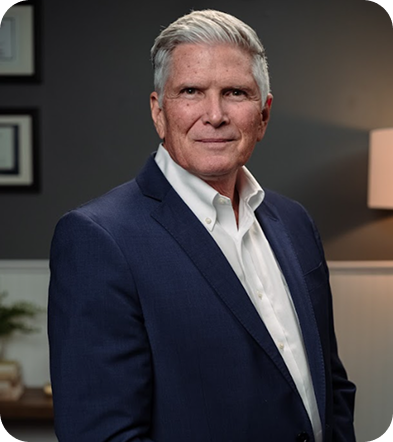
It named a mechanism. Rather than calling for rate cuts or vague policy intervention, the article pointed to portability and assumability as concrete, tested tools — already operating in other markets — that could unlock supply without waiting for the Fed.
It shifted the frame. The conversation stopped being about waiting and started being about working with what already exists.
As The Client Put It
What stood out wasn’t just the visibility — it was how quickly the idea moved. Within weeks, we were seeing the same framing echoed across policy and media. That doesn’t happen by accident.
Within three weeks, the conversation moved.
On November 11, 2025 — eighteen days after Bob's article published — FHFA Director Bill Pulte posted on X:
"At Fannie and Freddie, we are evaluating how to do assumable or portable mortgages, in a safe and sound manner." The following day he reiterated: "We are actively evaluating portable mortgages."
This marked a critical shift. The framing Bob had articulated — rate lock-in as the structural problem, portability as the mechanism to solve it — had aligned directly with where federal housing policy was moving.
The idea had gone from opinion to policy consideration in under three weeks. That shift matters.
Policy conversations don’t emerge in isolation. They follow pressure, narrative alignment, and timing. When a regulatory body begins publicly evaluating a concept, it signals that the idea has moved beyond theory and into active consideration.
Bob’s framing didn’t just anticipate that direction. It mirrored it early enough to become part of it.
At that point, the conversation was no longer hypothetical. It had entered the policy layer — where ideas are tested, debated, and eventually operationalized.
What followed was a full-scale national conversation.
Within 72 hours of Pulte's statements, portable mortgages had moved from a niche industry discussion to mainstream financial news. Every major outlet that covers housing ran the story:
Barron's, Yahoo Finance, Redfin, The Week, and dozens of regional outlets followed.
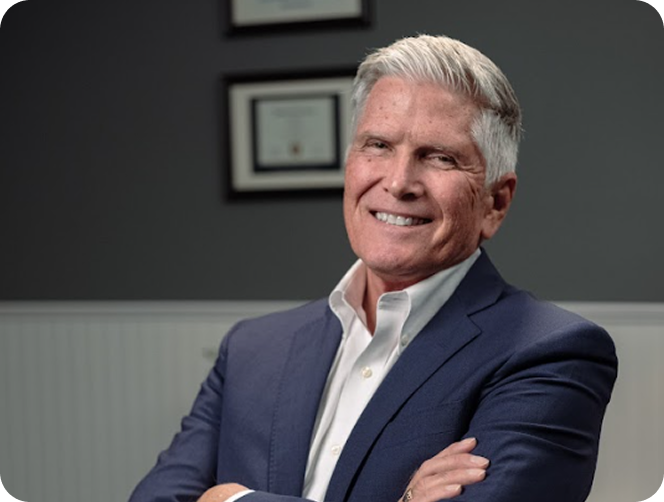
The Bipartisan Policy Center published a formal policy analysis in January 2026 — "Can Assumable or Portable Mortgages Unlock the Housing Market?" — examining portability as a legitimate structural solution to the lock-in effect.
The narrative had traveled the full distance: from a single HousingWire opinion piece to federal policy evaluation to bipartisan think tank analysis to mainstream media saturation — in approximately 90 days.
Policy Alignment
FHFA publicly evaluating
Media Expansion
Across major media outlets
Narrative Adoption
Single opinion piece to bipartisan policy analysis
Outlet Saturation
National & Regional amplification
Bob didn’t just contribute to the conversation. He influenced how the conversation was framed. The industry didn’t just hear the idea. It started repeating it.
By the time others joined the conversation, the framing had already been decided.
The industry was focused on the wrong variable. Rate reduction was the consensus solution — and it was entirely outside any single actor's control. Bob's thesis focused on rate mobility, which was a solvable problem with existing tools. That distinction created attention because it gave people something actionable to argue about.
Portable mortgages faced genuine, credible skepticism. Industry experts correctly noted the MBS complications, the securitization structure challenges, the legal hurdles of transferring collateral from one property to another. Those objections were real — and Bob acknowledged them. But the conversation moved anyway, because the idea addressed a structural constraint that the entire market was feeling. Being early and being right eventually are not the same thing, but one is a prerequisite for the other.
The market was sitting on a powder keg of trapped value. Just over half of U.S. mortgage holders carried rates at or below 4%, while new mortgages were pricing in the 6–7% range — a gap that translated to roughly $350 per month or $125,700 over the life of a $400,000 loan. The incentive to stay put was enormous. The cost to the broader market was real. Bob identified the tension before the policy world caught up to it.
Most professionals wait for validation before they speak publicly.
That guarantees they are late.
The value in what Bob did wasn't predicting the future. It was entering a conversation before it became obvious — and framing it in a way that others adopted.
By the time Pulte made his statements, by the time Bloomberg and CNN ran their explainers, by the time the Bipartisan Policy Center published its analysis — the framing Bob had established was already baked into how everyone was discussing the problem.
That is how thought leadership actually works.
It's not volume. It's direction. It's not attribution. It's alignment with what emerges next. It's not being the loudest voice in a crowded conversation. It's starting the conversation before the crowd arrives.
The window to lead is always before consensus forms.
Once something is widely agreed upon, the opportunity to shape it is already gone.





Moxie Creative Studios is a MWBE-certified digital marketing and personal brand authority agency based in Rochester, NY. We build the brand infrastructure that turns experts into authorities.