Businesses Activated
With Real Opportunities
Corporate Buyers
Engaged with intent
High-impact Experience
Designed for interactions
Outcome Focused
In every design element
The decision was to treat the Summit not as a conference, but as an ecosystem. That meant designing an environment where every interaction had purpose — where businesses weren’t just present, but positioned, and where corporations weren’t just attending, but actively engaging.
The focus shifted from programming to outcomes. Instead of asking, “What should happen on stage?” the question became:
“How do we create the conditions for real partnerships to form?” That required:
Moxie designed and executed the Summit end-to-end, ensuring that every layer supported the same objective: meaningful engagement.
The work included:
It was an active marketplace.
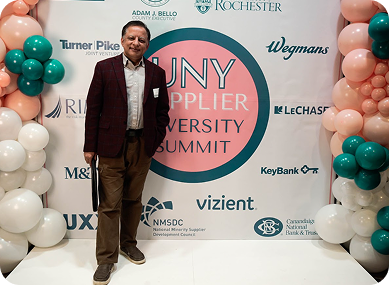
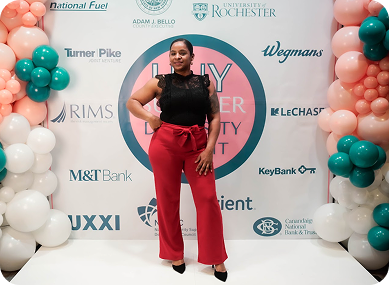
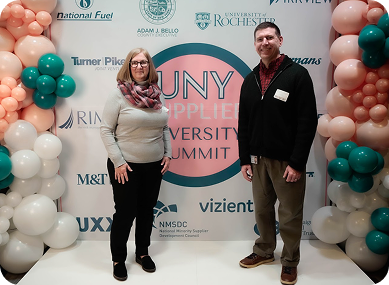
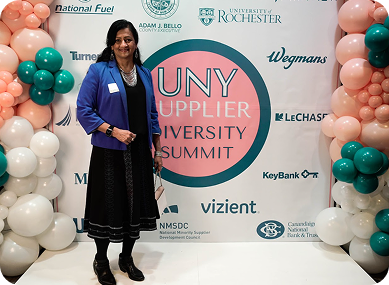
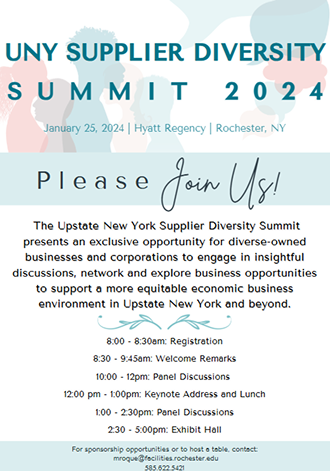
Over 500 diverse-owned businesses were present, each given the opportunity to showcase their capabilities, connect with corporate representatives, and position themselves for growth. More than 50 corporations attended with intent — not just to observe, but to identify new vendor relationships.
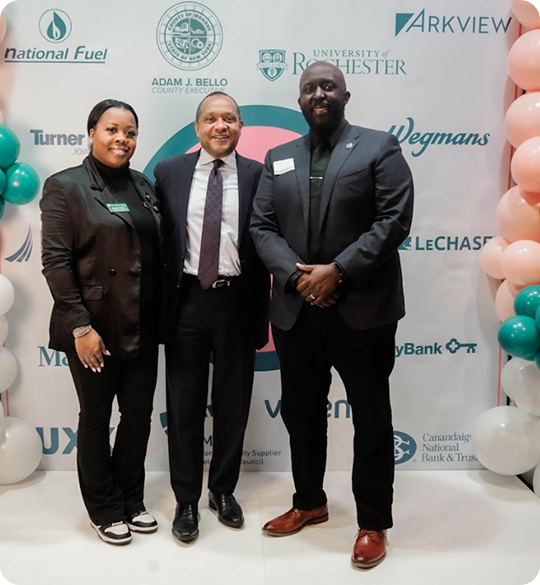
The event also featured influential voices, including Mayor Malik Evans, County Executive Adam Bello, and Jason Myles Clark, Executive Vice President of the NYS Division of Minority & Women’s Business Development — reinforcing the Summit’s importance at both a local and state level. But the real impact was not on stage. It was happening in the room.
As The Client Put It
Moxie didn’t just organize an event — they built an environment where real business happened. The level of thought behind every detail showed. We didn’t just see conversations, we saw partnerships starting. That’s rare.
The Summit created momentum.
Connections were made not as fleeting introductions, but as meaningful starting points for future partnerships.
The message continued to circulate. The relationships continued to develop.
The event did not end when the doors closed.
What made the Summit effective was not just who attended.
It was how the experience was designed.
This is what experiential marketing does at its best: It removes friction between people who need each other.
Instead of hoping connections happen, it creates the conditions where they almost have to.
That’s the difference between networking and marketplace design.
Businesses Activated
With Real Opportunities
Corporate Buyers
Engaged with intent
High-impact Experience
Designed for interactions
Outcome Focused
In every design element
A high-impact event that positioned supplier diversity as a practical, actionable priority. Sustained visibility through content marketing that extended the Summit’s reach beyond the event itself.
The Summit created alignment between intention and action. Supplier diversity stopped being a talking point. It became something people could step into.
Most events prioritize programming. This one prioritized connection. That shift changed how people showed up and how they engaged.
It wasn’t just about attendance volume. It was about alignment. Businesses came ready to connect. Corporations came ready to engage.
By structuring the environment as a marketplace, the barriers to interaction were lowered. Conversations became easier, faster, and more productive.
Content marketing ensured that the Summit was not a one-day spike, but part of a longer conversation around economic growth and supplier diversity.
Events alone do not create impact.
Well-designed environments do.
When you bring the right people together without structure, you get conversations.
When you bring them together with intention, you get outcomes.
This case shows what happens when branding, experience design, and strategy align around a single goal:
Make opportunity visible and accessible.
Because when people can clearly see where value exists, they move toward it.
Moxie Creative Studios is a MWBE-certified digital marketing and personal brand authority agency based in Rochester, NY. We build the brand infrastructure that turns experts into authorities.