Moxie Creative Studios

Your Brand Is What They Say When You Leave the Room

You don't control your brand. You influence it. The actual brand — the one that gets you hired, referred, and repeated in rooms you'll never enter — is what other people say about you the moment you stop talking.

Jeff Bezos said it plainly: your brand is what people say about you when you're not in the room. It's a useful provocation because it moves the ownership question somewhere most professionals don't look. They spend enormous energy on their presence in the room, their pitch, their bio, their performance — and almost none on the stories that circulate after.

Those circulating stories are the brand. They're what gets repeated in the hallway, in the group chat, in the introduction before the meeting. They determine who gets called first. They shape whether a referral happens at all.

The Gap Between Intention and Reception

Most professionals have a version of themselves they intend to project and a version the market actually receives. The gap between those two versions is where brand work lives.

The intended version is usually accurate — careful, expert, genuine. The received version is usually incomplete, because the market works from shortcuts. They can't hold the full complexity of who you are, so they compress you into a story. The question is whether you designed that story or inherited it.

Inherited brands are built from whatever is most memorable, most available, and most repeated. They're accurate in the way a caricature is accurate — they capture something real, but the proportion is wrong. The one project that went sideways looms larger than the dozen that ran flawlessly. The offhand comment carries more weight than the prepared talk.

Designed brands are built on purpose, repeated on purpose, and supported by proof that makes the right story the easiest story to tell.

Making Your Brand Repeatable

The professional whose brand works well has solved the retelling problem. When someone finishes a conversation with them and walks into another room to make a referral, the words come easily. She helps founders build authority before they raise their next round. He's the attorney you call when the deal is already complicated. She built the marketing infrastructure that took the company to Series B.

Those sentences work because they're specific. They survive the conversation that happens after the conversation. Vague expertise doesn't travel. "She does branding" gets forgotten by the second mention. A specific outcome — "she helped me stop competing on price and start attracting clients who already wanted exactly what I offer" — gets repeated.

The work, then, is building a body of specificity: a position that names who you serve and the problem you solve, delivered consistently enough that the people around you can repeat it accurately, and backed by proof public enough that they can point to it when they do.

What the Strongest Brands Have in Common

The professionals with the most durable brands aren't the ones with the most credentials or the longest track records. They're the ones whose stories are the easiest to tell.

That ease is intentional. It comes from clarity about what they stand for, consistency in how they show up, and enough public proof that a stranger who's never met them can form an accurate impression before the first introduction.

You're not in the room. But your brand is, every time someone says your name.

Build one worth repeating.

The Relatability Trap: What It’s Costing Your Brand

Somewhere along the way, women were told that the key to building a successful personal brand was relatability.

Be approachable.Be vulnerable.Be “just like them.”Don’t sound intimidating.Don’t be too polished.Don’t be too certain.

And for a while, it worked.

Relatability helped women get seen. It helped them get engagement. It helped them feel human in a digital world that once rewarded perfection.

But in 2026, relatability has crossed a line.

What once built connection is now quietly eroding authority — and most women can feel it, even if they haven’t named it yet.

If people like you but don’t defer to you…If your content feels warm but forgettable…If your expertise isn’t translating into demand…Relatability may be the reason.

Relatable Is Safe. Authority Is Selective.

Relatable brands aim to be understood by everyone.Authoritative brands are trusted by the right people.

That distinction matters more than ever.

When you optimize your voice to be endlessly accessible, you unconsciously smooth out the very edges that make you distinct. You remove conviction. You soften perspective. You hedge statements. You explain instead of declare.

The result?

You sound reasonable.You sound kind.You sound competent.

And you sound exactly like everyone else.

Authority doesn’t come from being familiar.It comes from being clear.

High-level brands are not built on sameness — they are built on discernment.

The Overcorrection That Diluted Women’s Leadership

Relatability was a necessary correction to rigid, masculine leadership models. It gave women permission to bring emotion, story, and humanity into their work.

But the pendulum swung too far.

Now many women are:

• narrating their uncertainty instead of their insight

• sharing process instead of perspective

• leading with confession instead of conclusion

• centering how they feel instead of what they know

This doesn’t make you more trustworthy.It makes you harder to follow.

Your audience isn’t looking for you to be in it with them.They’re looking for you to be slightly ahead.

Leadership requires direction.

Resonance Is Not Relatability — And This Is Where Most Brands Get It Wrong

Resonance doesn’t mean “I’m just like you.”Resonance means “I see what you’re experiencing — and I can articulate it with clarity.”

Your audience doesn’t need you to mirror their confusion.They need you to name it, contextualize it, and show them what matters.

That requires:

• synthesis

• pattern recognition

• lived experience

• discernment

• a willingness to take a stand

Resonance is intellectual and emotional precision — not sameness.

And it creates far more trust than relatability ever could.

What Happens When You Lead with Authority Instead

When women shift from relatability to authority, several things happen quickly:

• Their content becomes simpler and sharper

• Their audience gets clearer — and more aligned

• Their visibility attracts higher-caliber opportunities

• Their prices face less resistance

• Their brand feels calmer, not louder

Authority reduces friction.

It tells your audience: “You’re safe here. I know where we’re going.”

That is deeply attractive.

How to Reposition Without Becoming Cold or Distant

This is the fear that keeps women stuck.

Authority does not require detachment.It requires integration.

Here’s the shift:

• Share insight, not play-by-play processing

• Speak from resolution, not rumination

• Use story to illustrate wisdom, not seek validation

• Let warmth support your message — not replace it

You don’t lose humanity when you do this.You gain leadership.

The women who master this balance don’t feel louder.They feel grounded.

The Question That Reveals Where You’re Diluting Your Power

Ask yourself:

“Am I trying to be understood — or am I willing to be trusted?”

Because trust requires clarity.And clarity requires you to stand somewhere.

Relatability asks for agreement.Authority invites alignment.

Only one of those scales.

Your Brand Isn’t Here to Be Liked — It’s Here to Lead

You are not here to be endlessly digestible.You are not here to soften truth so it lands gently.You are not here to make everyone comfortable.

You are here to:

• clarify

• direct

• elevate

• shape perception

• set standards

And the women meant to work with you will rise to meet that.

The rest were never your audience anyway.

Ready to Reclaim Your Authority?

If you feel your brand has been dimmed in the name of being relatable, let’s recalibrate.

Book a call and we’ll refine your voice, positioning, and message so your brand reflects the level of leadership you actually carry.

→ Book your Brand Authority Call

Your Brand Is Tired — Here’s How to Rebuild Your Identity Without Burning Everything Down

2. Content Volume Won’t Matter — Coherence Will

• A clear point of view

• A consistent emotional tone

• A coherent message across every platform

3. Values-Driven Leadership Will Outperform Performative Empowerment

• Speaking opportunities

• Press & media

• Strategic partnerships

• Corporate leadership roles

• High-ticket consulting offers

5. Emotional Intelligence Will Become a Revenue Driver

• Higher engagement

• Stronger communities

• Faster trust-building

• Higher-priced offers accepted with less resistance

6. Personal Brand Ecosystems Will Outperform Standalone Platforms

• LinkedIn

• Podcasts

• YouTube

• Events and conferences

• Email

• Search

The Truth Beneath All the Trends

• Speak boldly

• Lead with depth

• Stand in their values

• Build coherent, strategic brands

• Share experience-backed insight

• Choose resonance over performance

• Embrace visibility as a responsibility, not a risk

Your Personal Brand Is Not a Logo — It’s a Legacy

“Humans don’t connect with persona — they connect with presence.”

What You’re Really Building: A Legacy

• Your messaging starts to sound like truth, not strategy.

• Your audience begins to feel you before they even follow you.

• And your business becomes an extension of your identity — not a mask you wear to perform success.

“A logo catches attention. A legacy keeps it.”

When Branding Becomes Identity Work

“Your brand isn’t what you build — it’s what you become.”

How to Start Building Your Legacy (Not Just a Brand)

• Audit your alignment. Ask: Does my online presence reflect the woman I am becoming — or the one I’m outgrowing?

• Rewrite your bio through your future self’s lens. Not what you’ve done, but what you’re here to do.

• Revisit your visuals. Every color, texture, and photo should tell the same energetic story.

• Speak your truth louder. Even if your voice shakes. Especially if it does.

Power Dressing: The Psychology of Being Well-Dressed in Business

There’s a moment that happens before you ever speak — a quiet assessment, an energetic read. The room feels you before it hears you.

That’s the power of how you present yourself.

Clothing is language. Every fabric, color, and silhouette communicates something before a single word is exchanged. It’s not about vanity; it’s about vibration. The way you dress is the first translation of your energy.

“Style isn’t surface. It’s frequency made visible.”

In business, especially for women, the visual self is often politicized — too bold, too soft, too polished, too plain. But beyond those cultural narratives lies something deeper: the psychology of appearance, and how it shapes confidence, cognition, and perceived authority.

When you understand that what you wear affects not only how others see you but how you see yourself, your wardrobe becomes a tool for embodiment, not performance.

The Science of Self-Perception

According to research from Northwestern University on “enclothed cognition,” what we wear directly influences our psychological processes — our posture, confidence, and even decision-making abilities. Participants wearing clothing associated with power and precision consistently performed better in attention-based tasks and displayed higher self-command.

In short: when you dress like authority, your brain believes you.

A Forbes study on workplace presentation found that 78% of professionals feel more confident when they consider their outfit intentional. But here’s where it gets interesting — confidence is contagious. When you feel composed, others mirror that energy.

This is energetic reciprocity. Your state sets the tone of every interaction.

“Presence precedes perception.”

You’re not dressing to impress; you’re dressing to express. You’re sending a signal — to yourself first, then to the world — about the standard you’ve chosen to embody.

Fashion as Frequency

Every color, cut, and fabric carries a vibration. That vibration interacts with your own energetic field, amplifying or dampening your natural frequency.

Color theory isn’t just visual psychology; it’s energetic resonance. Deep, saturated tones communicate stability and authority. Light neutrals project serenity and trust. Jewel tones evoke creativity and magnetic presence. Black signals sovereignty and clarity — but when worn unconsciously, can also act as armor.

This is why color analysis, when approached through an energetic lens, becomes a brand strategy tool. It helps you select the palette that harmonizes with your essence and leadership identity.

“Clothing is energy architecture. The colors you wear build the frequency you lead with.”

The same applies to silhouette and structure. The lines that shape your clothing mirror the lines of your energy. Strong tailoring brings focus and command. Flowing fabrics convey receptivity and movement. Neither is better — both are necessary. The magic lies in choosing from conscious intention, not social conditioning.

The Cultural Imprint of Appearance

Modern women are still navigating centuries of mixed messages about visibility. Be stylish, but not vain. Be powerful, but not intimidating. Express yourself, but stay appropriate.

It’s a paradox that teaches women to internalize one central fear: being too much.

Fashion has historically been one of the few socially acceptable outlets for feminine self-expression, yet it’s also the most policed. In boardrooms and media, women’s attire is still scrutinized more than their ideas.

A 2024 McKinsey Women in the Workplace report notes that while women now represent a record number of executives, they continue to face subtle bias about “presentation” and “tone.” Even when unspoken, those cues shape how women calibrate their style — not from authenticity, but from adaptation.

But the next era of feminine leadership isn’t about fitting the mold. It’s about redefining it. When you consciously curate your aesthetic, you’re not conforming to standards — you’re reclaiming authorship.

“Style isn’t how you fit in. It’s how you frequency-match your next level.”

The Embodiment of Style

One of my clients, a creative director turned founder, arrived to her first brand session dressed in muted neutrals and soft shapes. Her visuals were elegant, but she felt unseen. “I keep being told I’m approachable,” she said, “but I want to be unforgettable.”

We explored her brand energy — visionary, precise, refined with an edge. Her clothing didn’t yet match her message.

She began to experiment with tailored blazers in deeper hues, gold accents, and structured pieces that mirrored her clarity. She wasn’t hiding behind color anymore; she was inhabiting it.

Within months, she began booking higher-tier clients and commanding more ease in her sales conversations. “It’s like my energy finally caught up to my identity,” she said.

This is the essence of style as embodiment. It’s not costume. It’s coherence. Your wardrobe can anchor your frequency into form. When your external matches your internal, you transmit authenticity at every level. That congruence is what the world responds to — not the trend, but the truth.

The Mirror Between Wardrobe and Brand Identity

The psychology of being well-dressed extends beyond personal expression — it directly shapes your brand presence.

Your personal style is the first impression of your brand essence. It communicates your positioning before you open your mouth. It tells people what level of consciousness, care, and creativity you operate from.

Just as your website, logo, and typography communicate visual identity, your wardrobe communicates human identity.

The woman who invests in her visual coherence is the same woman who creates coherence in her messaging, leadership, and content. It’s not about luxury — it’s about integrity.

When you align your wardrobe with your brand, you embody your message with every movement. That’s omnichannel visibility in its purest form — when your walk, your tone, your color palette, and your presence all tell the same story.

“Your wardrobe is your brand’s first language.”

The Psychology of Authority and Presence

Authority is not loudness. It’s clarity.

The human brain makes visual judgments in milliseconds. Before we process words, we register tone, symmetry, and color. These subtle cues inform whether we perceive someone as trustworthy, competent, and confident.

A study published in Nature Human Behaviour found that people wearing professional attire were not only perceived as more authoritative but also performed with greater cognitive control and abstract thinking — indicators of leadership potential.

Clothing alters cognition because it alters identity. When you intentionally dress for the version of you you’re becoming, your physiology follows. Shoulders back. Chin lifted. Thoughts sharper. Energy higher. That’s not performance — that’s embodiment.

How to Dress for Your Frequency

Clothing is a tool of calibration. To harness it, you have to know what frequency you want to embody.

Identify Your Core Brand Energy. Are you leading with elegance, edge, warmth, precision, or power? Choose clothing that mirrors that essence in color, texture, and fit.

Align Structure With State. If you need grounding, wear tailored lines and heavier fabrics. If you want to open your creativity, choose flow and softness. Your silhouette can stabilize or expand your energy.

Curate a Palette of Resonance. Notice which colors make you feel alive and which drain you. Use color analysis not for trends but for alignment.

Dress for Embodied Momentum. Your wardrobe should reflect where you’re going, not where you’ve been. When you dress as your next evolution, your energy starts rehearsing it daily.

“Every outfit is a frequency rehearsal.”

The New Paradigm of Power Dressing

Traditional power dressing was about armor — sharp suits, monochrome palettes, assimilation. It worked in a world that valued sameness.

But this new era of leadership is asking for authentic resonance. We no longer need to dress for permission; we get to dress for expression.

For women in business, this is revolutionary. We’re rewriting what authority looks like — moving from performance to presence, from conformity to coherence.

Power dressing, redefined, isn’t about gender or fashion. It’s about alignment. When a woman is dressed in integrity with her energy, her presence commands without effort. That’s the psychology of being well-dressed — not because of how she looks, but because of how she feels in her own frequency.

“Authority is built when appearance and essence finally agree.”

The Reflection

Your wardrobe is an altar of becoming. It holds the story of who you’ve been — and the energy of who you’re becoming.

Every morning, you have the opportunity to choose coherence over compliance, embodiment over expectation.

When you treat your clothing as a tool of consciousness, getting dressed becomes a ritual of alignment.

And that alignment, more than anything you’ll say in a meeting or post on social media, is what the world remembers.
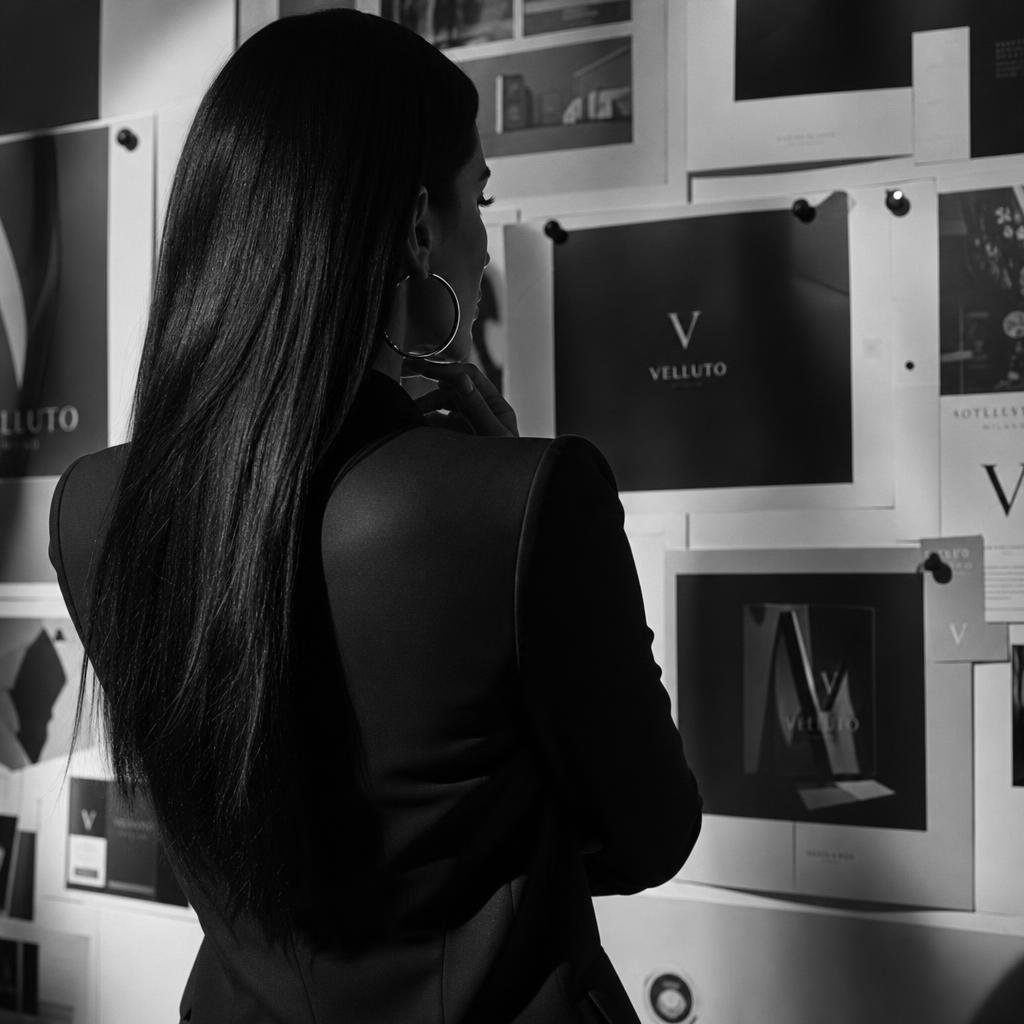
The Rebrand You’re Craving Might Actually Be Reinvention

It Starts with a Feeling You Can’t Ignore

“A rebrand changes how the world sees you.

Reinvention changes how you see yourself.”

3. Voice — The Reclamation of Truth

“Evolution isn’t branded—it’s embodied.

When you own your new frequency, the world can’t help but recalibrate.”

From Rebrand to Reinvention: The Moxie Way

• The Pause. Creating space between the old and the new so you can hear your truth without noise.

• The Reflection. Mapping what’s worked, what’s misaligned, and what feels complete.

• The Recalibration. Refining your message, visuals, and offers to match your evolution.

• The Reveal. Crafting an identity that doesn’t just represent your next level — it embodies it.

The Feminine Frequency of Reinvention

“You don’t find your new brand — you remember it.”

Questions to Ask Yourself Before You Rebrand

• What version of me am I ready to stop performing?

• What energy do I want people to feel when they experience my brand?

• What conversations am I no longer interested in leading?

• What’s the next expression of my purpose?

Power & Presence: The Brand Glow-Up You Didn’t Know You Needed—Until Now

• One professional hair styling look

• One professional makeup look

• Wardrobe styling support (bring your best—we’ll finesse the rest)

• Photoshoots + video shoots on branded sets

• 15 edited photos + 3 short-form videos (Reels, TikToks, LinkedIn content)

• Signature Moxie sets, curated playlists, mimosas, light bites

• All-day ambiance designed to amplify your confidence + visibility

• Outdated headshots are costing you opportunities

• Inconsistent visuals dilute your message

• Playing small visually is a silent form of self-sabotage

Not Your Average Pop-Up: How to Build Buzz & Drive Conversions

Let’s cut through the noise. Top brands are ditching traditional ads and going full BTL (Below-The-Line) —creating experiences so magnetic they stop scrolls and spark sales. If you’re still shouting into a void, you’re missing the point.

Why BTL Pop Ups Are Winning

Gone are the days of passive ads. Today’s most remarkable campaigns connect emotionally, socially, and physically—on purpose. Cvent confirms: the most effective experiential activations hinge on authentic moments, shareable content, and tactical immersion.

How to Make It Work for You

1. Choose a relevant, unexpected venue

Skip the ballroom—think rooftops, co-working lounges, art galleries, or popup shops. Interesting venues alone start conversations.

2. Curate your guest list with care

Aim for 50–75 brand-aligned individuals—partners, clients, influencers—who already resonate with your narrative. Quality wins over quantity.

3. Design immersive micro-experiences

Think on-brand moments: demos, mini-consultations, scent journeys, live styling, or quick brand missions. Activation isn’t passive—it’s participatory.

4. Engage all senses

Display bold visuals, play a curated playlist, scent the air, and add tactile touches (wine glasses, tasting notes, branded swag). Create content-worthy moments.

5. Capture & repurpose the energy

Film BTS moments, gather testimonials, promote hashtags, and use photo stations. Extend the reach long after the event melts down.

These aren’t just events—they’re invitations. Gielissen reports a surge in “smaller-scale, culturally inspired moments” that craft unforgettable experiences without breaking the bank.

Why This Matters

A well-designed pop-up builds community, secures media attention, and provides measurable ROI in ideas, relationships, and engagement—not just impressions. It’s the spark that digital alone can’t replicate.

An immersive pop‑up isn’t a gimmick—it’s a growth engine. Done right, you build brand loyalty, earn press, and spark real ROI.

Top Experiential Campaigns That Actually Moved the Needle

Let’s be honest: not all campaigns are created equal. Some fizzle. Others? They light a fire under your brand and never stop burning. We’ve scouted 21 campaigns that actually did the damn thing—created buzz, made headlines, and converted eyeballs into loyal brand advocates.

Big Brands, Bold Moves

• Spotify’s Wrapped Cafés turned personal listening data into local community hubs—talk about connecting the digital to the tangible (Spotify’s local activation).

• Pinterest’s Manifestival gave users a real-life way to walk through their 2024 goals. Who says your vision board can’t serve cocktails? (Inside the Manifestival)

• Nike’s You Can’t Stop Us Experience took over entire city blocks with immersive installations that put attendees inside the story (Nike wins again)

Indie Brands with Major Vibes

• Glossier’s traveling pop-ups prove that intimacy scales when you lead with beauty and customer experience.

• Mejuri’s "Golden Hour" experience elevated a simple product launch with a dreamy, tactile journey into the brand’s energy.

• Kin Euphorics partnered with Soho House to create wellness-first tasting lounges. Zero alcohol, all vibes.

What They Did Right

• Centered their customer’s world, not their product.

• Made it photogenic—but with purpose.

• Gave people a story to tell and something to take home.

2025 Trends in Brand Immersion: What’s Next?

2025 isn’t asking for your attention. It’s demanding it. Audiences are tired of being sold to and ready to be invited in. Here’s what’s coming in hot this year and how to harness it to build real momentum.

Trend 1: Micro Moments, Macro Impact

Consumers want rich, intentional experiences—even in 20 minutes. Think curated brand suites, scent bars, micro styling activations. According to Event Marketer, brands that design with attention to time and emotion outperform every time.

Trend 2: Mixed Reality = Real Results

From Snapchat AR filters to full-blown holograms, 2025 is the year to blur the lines between digital and physical. Gartner says 80% of marketing leaders plan to invest in immersive tech. This isn’t a maybe—it’s a must.

Trend 3: Sound Strategy

Spotify playlists. Custom podcast episodes. Live sonic branding. Sound is becoming an immersive pillar—not just a backdrop. Fast Company is calling this the next big wave.

Our takeaway? Design for all five senses. Leave your audience with something they can see, hear, smell, touch—and never forget.

Boutique Activations, Big Results

Not every brand needs a Super Bowl budget. In fact, some of the most unforgettable experiences come from tight, highly intentional moments—executed with precision and a whole lot of soul.

Why Boutique Beats Big Box

A well-executed boutique activation can:

• Drive conversion through real intimacy

• Foster exclusivity that builds brand equity

• Create content for days

As BizBash explains, boutique activations drive higher engagement and stronger recall than many large-scale events. It’s not about more. It’s about meaning.

Formats That Work

• Private Styling Suites

• Curated Dinners with Brand Ambassadors

• Pop-Ups with Select Guest Lists

These formats allow you to show up where your people are—and show off what makes you unforgettable.

Ready to stop playing small and start playing smart? Moxie’s ready to build you something magnetic.

Why Your Brand Needs Micro-Moments That Pack a Punch

Let’s be real: attention spans are short—but impact? That’s eternal. In 2025, big budgets don’t define success—micro-moments do. Imagine a 20‑minute brand experience that feels like a full-blown saga. That’s not luck. That’s intentional design powered by experiential marketing.

Why Micro-Moments Matter

These aren’t just “cute” activations. They’re calculated, emotional punches:

• Mini-styling suites, scent bars, and quick VR demos are building blocks of a branded memory.

• According to Event Marketer, brands that design with both emotional resonance and attention to time consistently outperform their competitors.

• Event Track backs it up—74% of attendees are more likely to purchase after an immersive brand experience (Limelight Platform).

These aren’t vanity stunts—they’re revenue-driving machines wrapped in storytelling.

Big Results in Small Formats

Let’s name names:

• Cadbury launched Joyville pop-ups that merged flavor with performance theater, reminding us joy is an experience.

• Warby Parker turned a school bus into a rolling optical boutique. Intimate. Mobile. Unforgettable.

• Vogue Business calls these “festival microcosms”—tiny worlds with maximum energy.

Micro doesn’t mean minor. It means strategic.

How to Make Micro Moments Magnetic

• Start with a feeling. What emotion should your audience walk away with?

• Design around a sense. Taste, smell, sound—pick one and make it unforgettable.

• Lead them somewhere. Use QR codes, opt-ins, and post-event content to extend the relationship.

• Film everything. This is content gold—don’t waste it.

The Takeaway

Stop over-engineering. Start over-delivering in tight, juicy windows of time. You don’t need a Super Bowl budget to build a world-class experience. You need clarity, emotional insight—and just enough edge to make it stick.

Ready to Flex Your Brand in 20 Minutes or Less?

Let’s build a moment your audience won’t shut up about.

We’re not here to play safe. We’re here to play smart—and unforgettable.